At least six buckets of new fun – more game alongside the simulation!
Alright. This has been brewing in the background for a good while, and instead of dripping out pieces one at a time, I decided to bundle the whole stack into one big update. The result: Taajama Online is now clearly more of a game than a simulation. More fun, more humour, more planning, well.. more of everything.
There are more of these buckets coming too, bigger and smaller ones. Fun on the horizon, then – and the bucket storage is still pretty full anyway.
This time I want to open up a bit about how we got here. What was tried, what didn't work, and what only worked on the third attempt in the middle of the night when I should have been asleep.
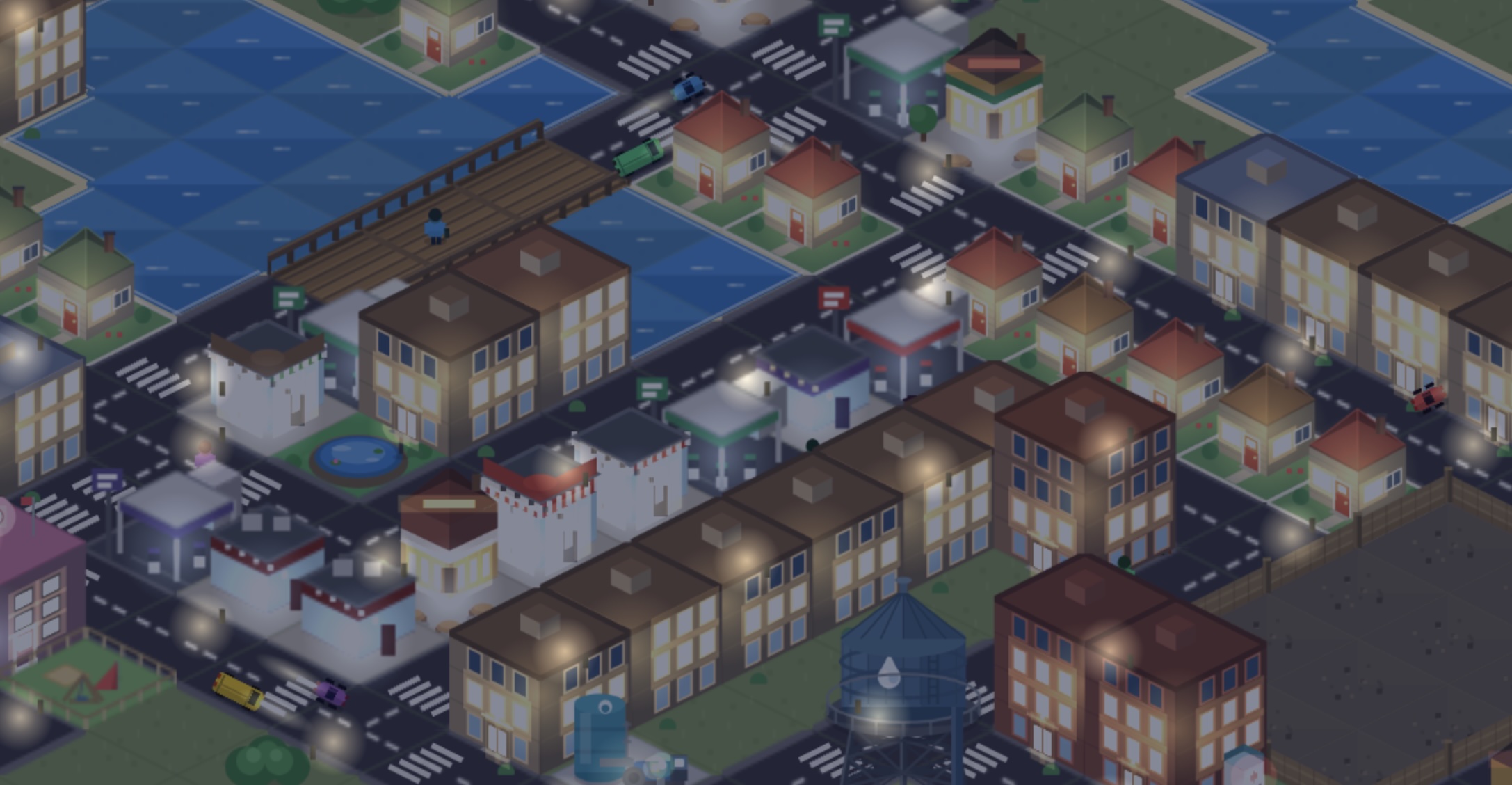
The starting point: the simulation works, but the gameplay was missing
The original problem was clear: the simulation worked too well. Residents lived, went to work, had children, complained to the suggestion box. Everything ticked along nicely like clockwork. Great, but boring. There was essentially nothing for the player to do. Once the city was built, the whole thing turned into an aquarium – the kind that feeds itself and doesn't even need you, except maybe to admire it and tap on the glass.
Because this is a game, I wanted the player to have to make decisions with consequences: to prioritise, compromise, plan ahead and sometimes watch from the sidelines as it all goes wrong. This has of course been the guiding force behind the game's idea from the start, but along the way the gameplay got mostly buried under the simulation.
Economy: passive enrichment ends now
This was the first and most important change. Previously the city got rich essentially on its own. Businesses poured production income straight into your treasury, and you sat on a mountain of money without doing anything clever. Nice, but only for a moment. About as long as it's fun to watch your account fill up by itself and the only puzzle is where on earth to put all that money.
Various approaches were tried along the way:
- Just raise costs. Simple, but boring. The player suffers from the same boring mechanic at a higher price.
- Cut income really tight and force a debt game. Too brutal, a new city was broke in no time...
- Business income is the businesses' own profit, the city lives on taxes. This was the best option. I could of course have taken a model from existing games, it just would have been boring and maybe a good idea would have been lost if you only do things the way they've always been done. You have to at least try some other approach.
In the end I landed on: factory and shop output is their own private profit, and the city earns from them only through taxes. At the same time, upkeep costs doubled. Now the budget is a real puzzle: too high a tax kills production, too loose a one leaves the treasury empty.
On top of this, a door is left ajar for future development too, since something has to be figured out for those companies' savings... they can't lie under the mattress forever.
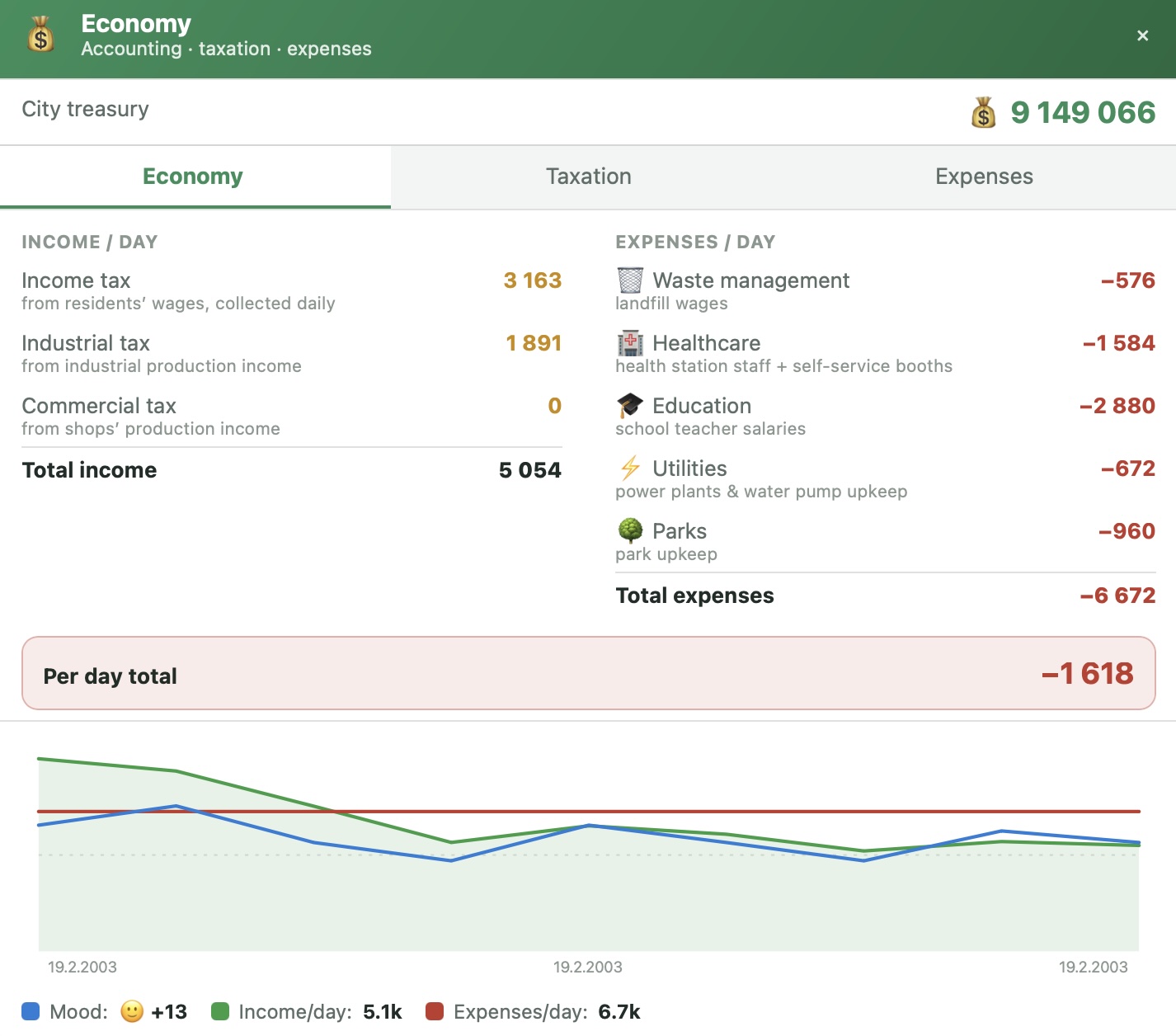
That change alone completely shifted the mood of the game. Suddenly all the taxes mean something, and the bottom line doesn't stay in the black quite so easily.
Power: it doesn't just come out of the wall anymore
Power was for a long time just a vague power unit, of which you produce X amount and everything consumes the same single "power", whether it's a steel mill or a one-person studio flat with a single bulb burning. It didn't feel like anything, not enough variation, no sense to it.
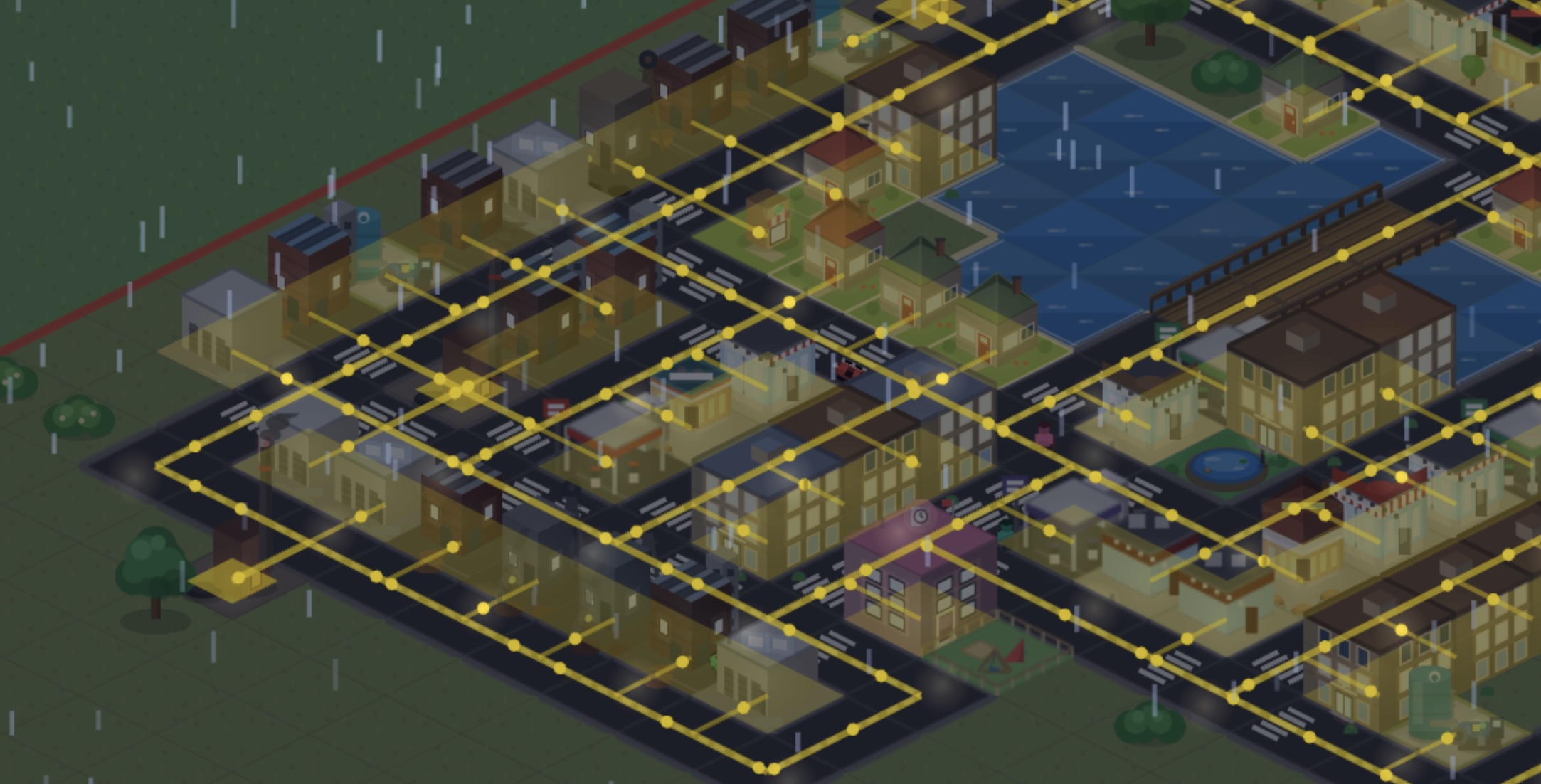
I moved power onto a kWh basis: plants have output, buildings have consumption, and power is distributed to the nearest consumers within the grid's reach. This naturally involved a frustrating amount of fiddling.
At first the output numbers were so big you never had to care about power, one plant covered the whole city and a bit of the neighbouring municipality too. Boring. Then I cranked them too tight, and half the city went dark at nine in the morning the moment everyone switched on their lights, coffee maker and hair dryer at once. The suggestion box filled up faster than I could read it, and not one message was a thank-you.
There still aren't many options for power generation in the game, so I added a small coal plant as a cheap starter option. It pollutes, so it has a price too. Cheap power or clean air? You decide – the residents will share their opinion regardless. The wind turbine works as before, producing according to the wind: with luck you get enough power, on a calm day you get to think about candles.
The result: power is now a real gameplay element, and it's possible to create more options that genuinely affect the bottom line. And it no longer "just comes out of the wall".
Water: the bottomless supply ends here
Here I made a conscious choice right at the start: water does not work like power. It would have been easy to copy the same power-pool model, but I wanted these two to feel different and demand different thinking. So water was more limited than power from the beginning, but it too was thought of as "blocks", a building uses 3 water...
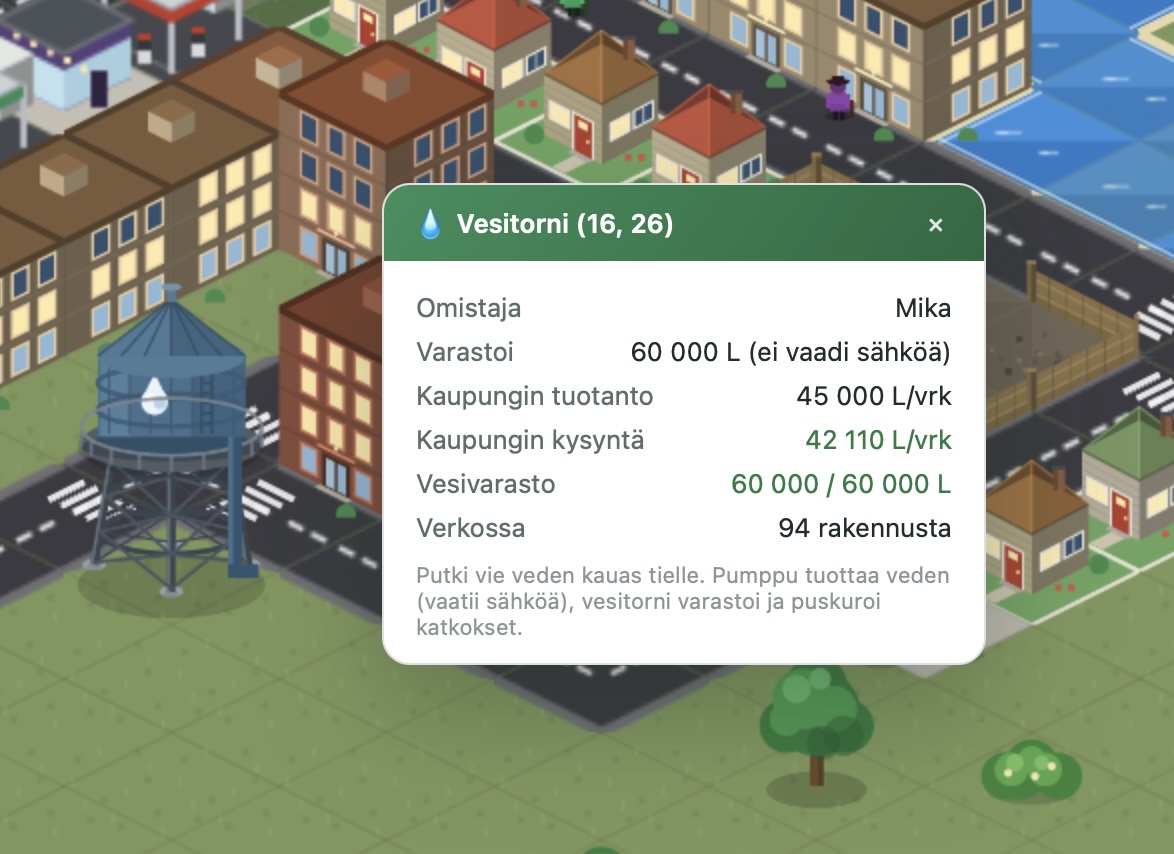
This needed an overhaul as well, so water is now litre-based and storable: a pump produces litres per day, and a water tower buffers outages. This brings a whole new part to the game. You don't just need enough production, you also need storage to survive peak demand and outages.
In balancing it took me a moment to realise that the pump should depend on power but the tower should not. Otherwise a single blackout takes down the entire water supply at once, and that felt like a punishment rather than a puzzle, a bit like a game where you lose the instant you blink. Now the tower saves you from the worst, if you knew to build one in time (you didn't, though, nobody does on the first try, it's part of the deal). I was tempted to wire the tower into the grid too, but maybe in the future the tower will serve two purposes and a different kind of tower could need power, we'll see.
Planning, not chance – from the dump to the schools
The same thread runs through everything else in this package too: force the player to plan, even a little.
The dump now has a single entrance, and you have to run a road to the right spot, you can't just slap it down wherever and hope for the best. A badly placed dump sits idle and the rubbish piles up in people's flats.
Rubbish isn't collected, it's taken out: households take out the trash when the bag is full and they have free time. No more magical weekly sweep where the rubbish vanishes by itself as if it had never existed. You actually have to think about traffic and timing.
Schools need a teacher to function, and they are now big campuses with their own yards, placement takes space and foresight. An empty school is just an expensive building that echoes.
Food and hunger are a real threat: without a staffed shop or a grocery kiosk, residents go hungry, move away and at worst die. To break the chicken-and-egg lock, a new city gets a few pioneers, but after that food supply is on you.
And the humour
This is a big deal for me, a game also has to be funny. Residents have ridiculous dreams and even more ridiculous suggestions ("build a bridge to the Moon, please" – and when you don't build it, they'll remember it for the rest of their life). Accidents are absurd, the local paper embellishes its headlines without shame, and every resident is their own little tragicomic story. I want you to smile when you read about the residents' lives, their writings, the paper or the suggestion box. There are of course also those messages that make you want to shut down the whole city.
In closing
This package didn't just add features, it turned Taajama more into a game. Before, you watched a simulation, now you play a city. You prioritise, plan, compromise and fix your mistakes. And hopefully you laugh a little along the way too, even a little.
More is coming. Those notebooks still aren't empty, and neither are the buckets. Find bugs, throw suggestions, and tell me if something feels unfair. The balancing continues, probably in the middle of the night again.