A little fine-tuning
This time our finger barely landed on the game's own mechanics, and instead on what happens behind the curtain. The mechanics are already in pretty good shape, so we turned our gaze to the future: how to make sure everything stays smooth even when there are far more players and far bigger cities.
What happened?
- The game now runs about 40% smoother. Same city, same simulation – just a whole lot less stutter.
- Big cities no longer drag things down the way they used to. The larger a town grows, the more work happens under the hood, and now that work gets done more efficiently.
- Getting ready for the rush. This is groundwork so that there can be many more players at once in the future without anyone's game starting to chug.
Hunting for bottlenecks
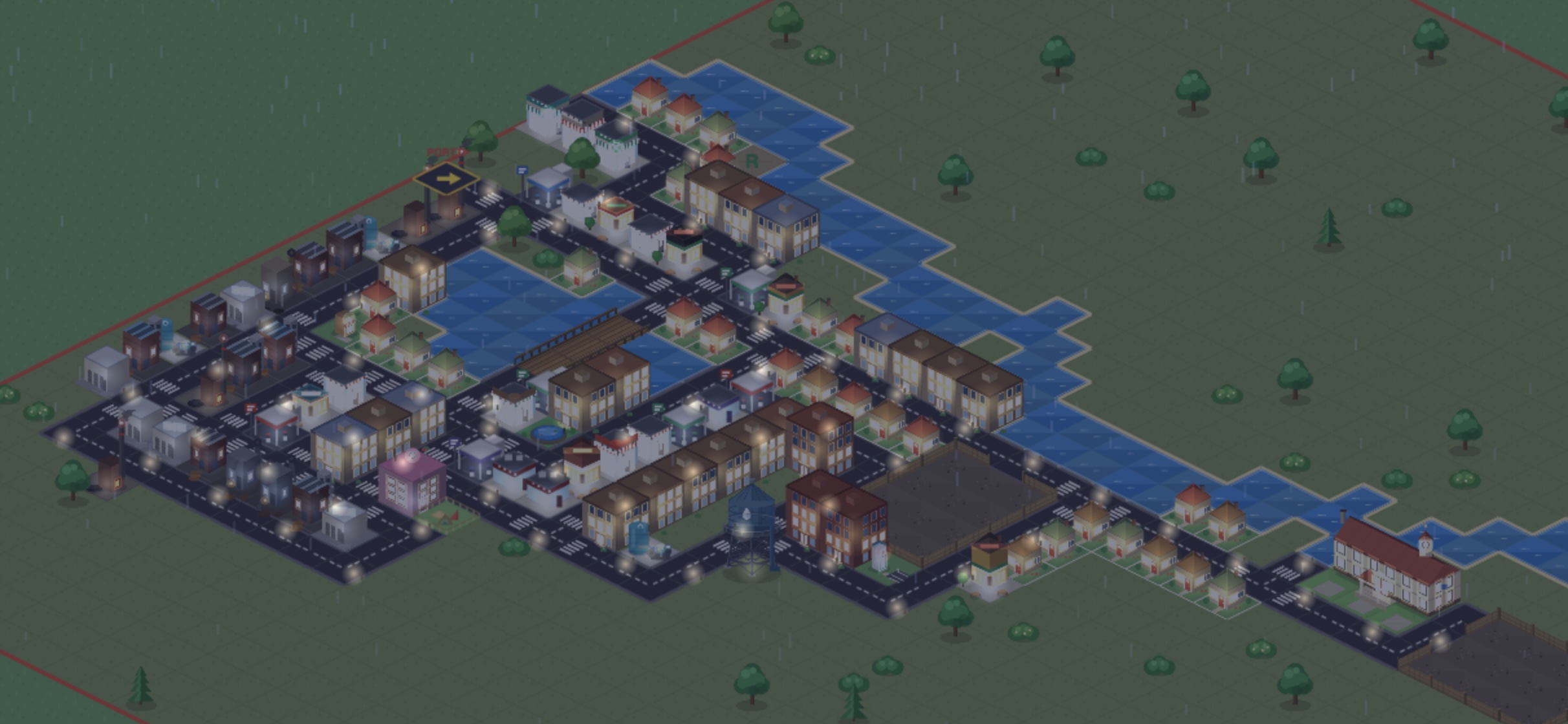
To find out what was slowing things down, we first had to break the game on purpose. So we ran a pile of giant cities all at once. Far more residents, tiles and ticking simulations than any real player could ever produce, and we waited for where the smoke started rising.
- We spawned entire ghost cities purely to be tormented. Thousands of digital residents lived full, dramatic lives. They went to work, complained about the bins, occasionally caught fire, blissfully unaware that their whole universe existed solely so we could stare at graphs and sigh.
- We added cities in parallel until something creaked. Bottlenecks love to hide exactly where you're not looking, and only reveal themselves once everything is happening at the same time.
- We fixed the slowest spots one by one. The boring part, but that's exactly where the 40% came from.
No real resident on the server was harmed in the process. Test residents, on the other hand, perished on an industrial scale, and they will be fondly remembered.
Getting memory in shape
Besides speed, we also put the game's memory usage on a treadmill. Every resident, tile and ticking simulation eats a little slice of memory, and once you have enough of them, those slices start to get pretty greedy.
We trimmed wasted memory so the same city now fits in noticeably less space. Less memory per city = more smooth-running cities.
Will you notice a difference?
You will. The city feels a touch smoother, and nothing starts wheezing when there's a lot going on and residents keep piling up.
What's next?
This won't be the last dive under the hood. We'll be running a lot more performance benchmarks and optimizations going forward, so everything keeps running smoothly even as the player count grows. That work continues in the background for as long as the game exists.
Next up comes the fun stuff again, as we focus on new features, buildings and mishaps. Coming up, among other things:
- New personality traits and features for residents – more character, more quirks, more reasons to love and rage at the little folk.
- More accidents. Life in town gets a little more unpredictable again (apologies in advance).
- Heroes – and plenty more we'll tell you about later.
See you in Taajama!